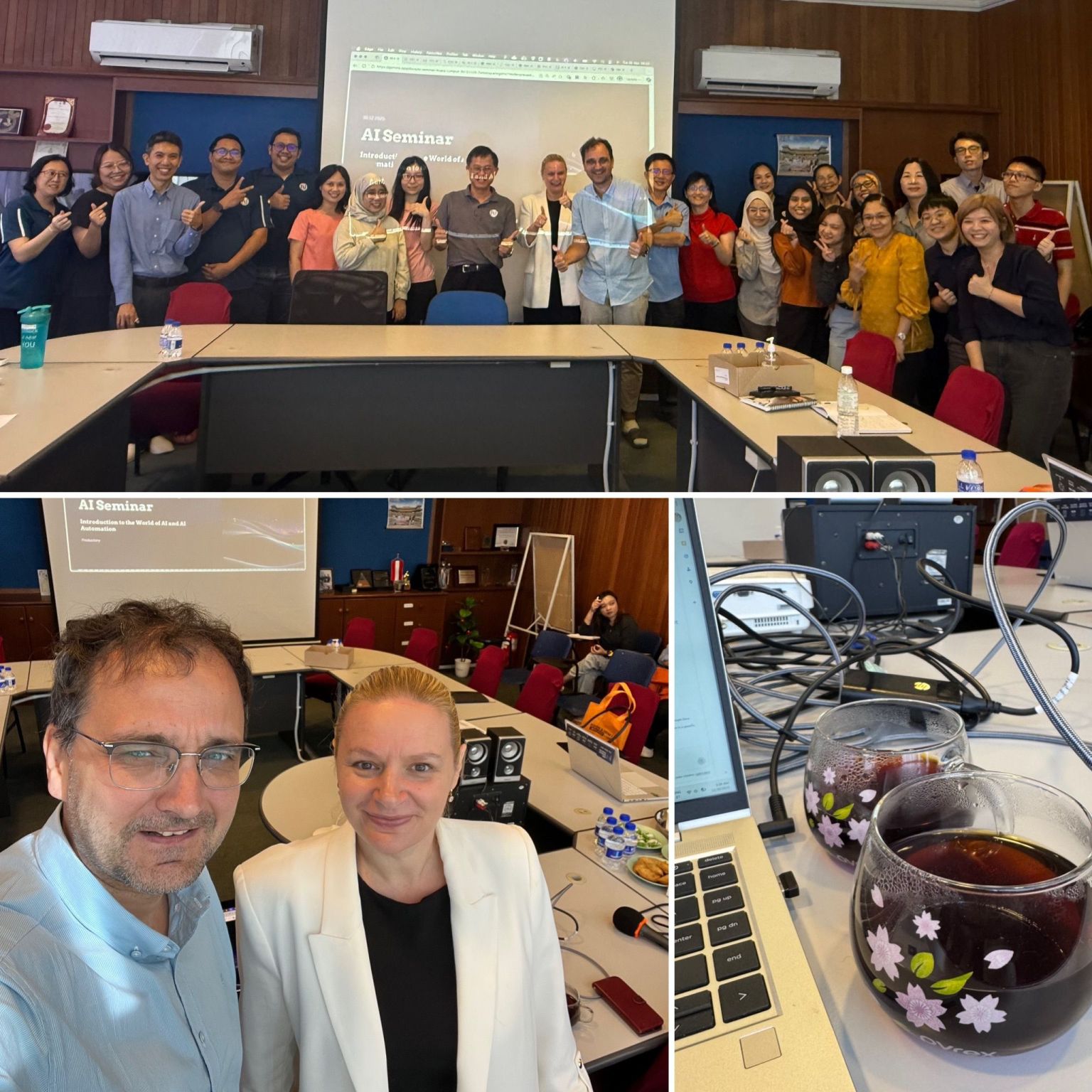
If I were to write down all the experiences we gained, the Estonian people would get a new epic saga - and nobody wants to read something that long. So here are just a few nuggets from what Jarmo and I heard and saw in Malaysia.
The Land of Certificates
Malaysia is a country of certificates. Before people start using a new product or service, they check the certificates - and if they're trustworthy, they buy.
In some ways, this is a good thing. For example, the business card of Steven, who invited us to train, had the company's certificates listed on it. I asked ChatGPT to explain what they meant, and I gained a much better understanding of the company's profile.
So if anyone is considering selling a service or product there, you need to factor in getting certifications. Providing them is also big business over there.
ChatGPT as a Travel Companion
ChatGPT (deep research) was actually very helpful in preparing for these meetings. I've done various international cooperation projects before, but never in Asia. So I wanted to be as confident as possible that I was familiar with the customs of this region.
One of the best pieces of advice I got from ChatGPT was: be friendly, but not pushy!
That's exactly how people communicate there.
The Culture of Saving
In Malaysia, saving money is held in high regard (read: also not paying). This doesn't necessarily mean they don't have money - after all, it's an oil-producing country. However, they try to get by as frugally as possible at every turn. Sometimes it's inspiring, but other times it's a bit silly.
For example, Jim, our host, told us that locals avoid one efficient expressway whenever possible because it costs 3 ringgits (60 cents). If you have to pay for something, they'd rather go the long way around. Time is free, after all.
This frugal approach means that if you want to sell a product or service in Malaysia, it needs to be either cheap, or very good and still very cheap. Do we have things like that?
IT and AI Competition
In AI and IT more broadly, if they can't find a suitable person or solution from the local market, they can get them from China or India. We can't compete on price. Even for Malaysians, they're relatively cheap labor - and by no means stupid.
Common practices include finding a provider from India or China for larger IT projects and, if needed, bringing 30-40 experts to Malaysia for a few months. During that time, the project gets completed, and the experts are sent back. Later, they buy a bit of development "maintenance" as needed.
This was the case even before AI capabilities came along, which means development is now even faster and increasingly cheaper.
Should We Write Off Malaysia?
Not at all.
However, when looking toward this region, you need to understand that it's a distant market, very different from ours, where we simply can't compete on price or volume.
Opportunities lie more in unique niches that just need to be discovered.